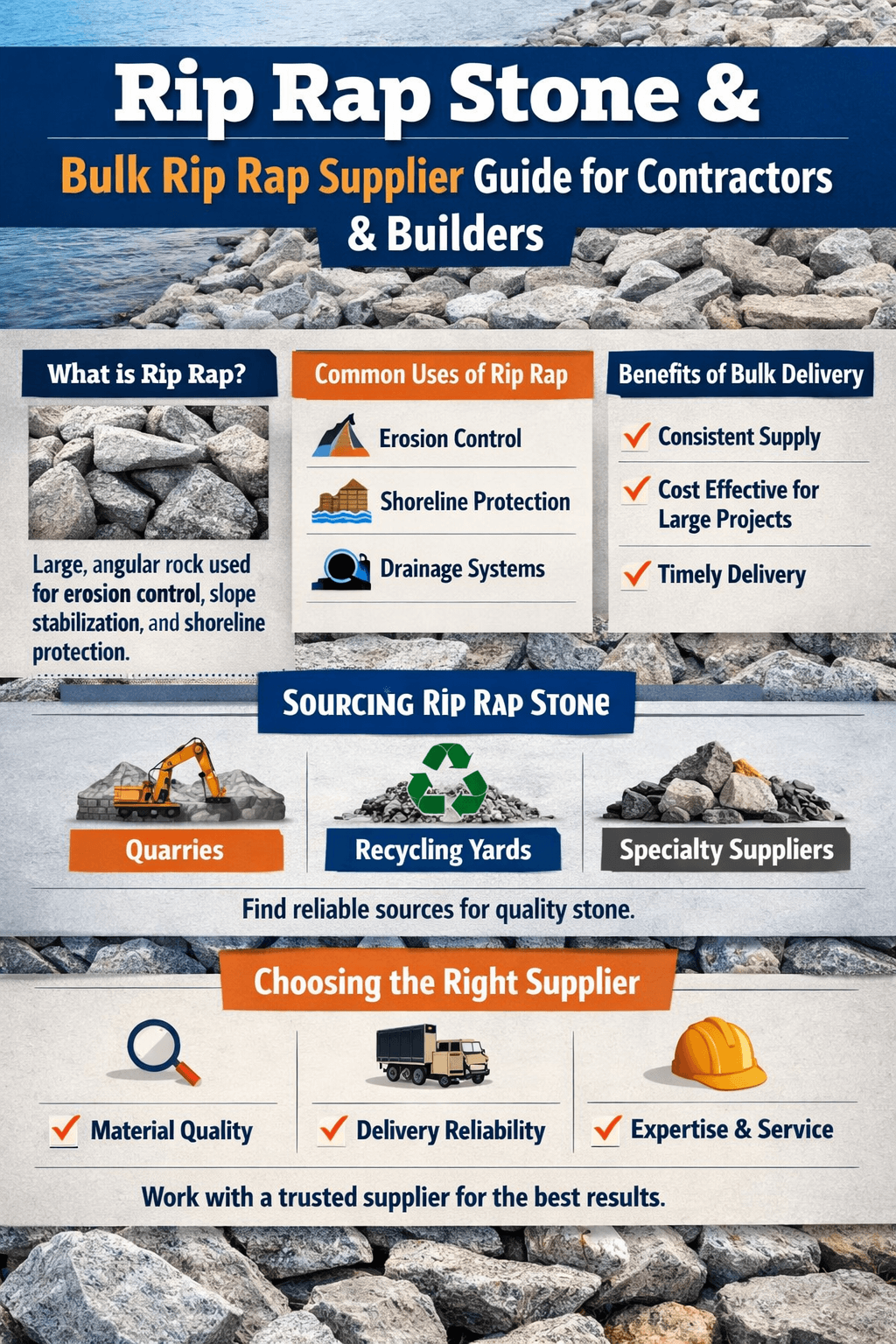
Rip rap is one of the most important materials used in large scale construction and erosion control. Contractors rely on it to stabilize slopes, protect shorelines, and reinforce drainage systems. While it may look like simple rock, rip rap plays a major role in infrastructure durability and long term site performance.
Builders, civil engineers, and site contractors often purchase rip rap in bulk quantities. Bulk rip rap delivery ensures projects receive the volume of stone needed for large installations without delays or inconsistent material quality.
This guide explains what rip rap is, how bulk rip rap is used, how contractors source it, and why choosing the right aggregate supplier matters. If you are responsible for sourcing stone for infrastructure, drainage systems, or shoreline protection, understanding rip rap will help you make better purchasing decisions.
What Is Rip Rap
Rip rap refers to large irregular stone used for erosion control and structural stabilization. The stones are typically crushed limestone, granite, or other durable rock types selected for their strength and resistance to weathering.
Unlike gravel or sand, rip rap pieces are intentionally large. Their size and weight allow them to stay in place under water flow, wave action, or slope pressure.
Rip rap is commonly used along riverbanks, drainage channels, bridge embankments, and coastal shorelines. It prevents soil from washing away and protects infrastructure from water related damage.
Bulk rip rap refers to large volume purchases of this material, typically delivered by dump truck or heavy haul trucks to construction sites.
Common Sizes of Rip Rap Stone
Rip rap is classified by size ranges rather than a single stone size. Contractors select the appropriate size depending on the application and the amount of water flow or erosion pressure present.
- Class 1 rip rap which often ranges from large stones roughly 12 to 36 inches
- Class 2 rip rap which may include stones weighing over 200 pounds
- Revetment rip rap which typically ranges from about 12 to 24 inches
- Large armor stone which can exceed several hundred pounds
Larger rip rap is used where stronger water forces exist. Smaller rip rap may be used for decorative shoreline stabilization or drainage systems.
Why Bulk Rip Rap Matters for Construction Projects
Large construction projects rarely need just a few stones. They require consistent material quantities delivered efficiently to the job site. Bulk rip rap ensures contractors receive the volume needed to complete slope stabilization and erosion control systems.
Purchasing rip rap in bulk has several advantages.
- Lower cost per ton due to large quantity pricing
- Consistent stone quality from a single quarry source
- Faster delivery for large projects
- Reduced scheduling delays
- Simplified logistics for project managers
Aggregate suppliers specialize in coordinating bulk deliveries to meet contractor schedules. This is especially important for infrastructure projects where installation must happen within strict timelines.
Where Rip Rap Is Used
Rip rap is used in many types of construction and civil engineering projects. Its main purpose is to resist erosion and stabilize soil.
Shoreline Protection
One of the most common uses for rip rap is shoreline protection. Lakes, rivers, and coastal areas experience constant wave action. Over time this movement can erode soil and damage nearby structures.
Installing rip rap along the shoreline creates a protective barrier that absorbs the energy of waves and prevents soil loss.
Drainage Channels
Drainage systems must handle heavy water flow during storms. Without protection, fast moving water can erode the channel walls and cause system failure.
Rip rap lines the drainage channel and stabilizes the soil. This helps maintain proper drainage performance and reduces maintenance costs.
Slope Stabilization
Steep slopes are vulnerable to erosion and soil movement. Rip rap can be placed along slopes to hold soil in place and reduce landslide risk.
This is common near highways, railways, and large commercial developments.
Bridge and Infrastructure Protection
Bridges and culverts often rely on rip rap to protect foundations from water flow. The stone prevents scouring around structural supports.
Without rip rap protection, flowing water can undermine foundations and create expensive structural problems.
Types of Stone Used for Rip Rap
Rip rap is not limited to one type of rock. Different regions use locally available stone sources.
Common rip rap materials include:
- Crushed limestone
- Granite stone
- Trap rock
- Recycled concrete in some projects
- Slag stone used in certain shoreline protection systems
The key requirement is durability. Rip rap must withstand weather cycles, water movement, and mechanical stress without breaking apart.
Bulk Rip Rap Delivery for Contractors
Delivery logistics play a major role in rip rap supply. Contractors typically order rip rap by the ton or by truckload.
Bulk rip rap delivery requires coordination between the quarry, aggregate supplier, and job site manager.
Delivery methods may include:
- Tri axle dump trucks for local deliveries
- Quad axle trucks for heavier loads
- End dump trailers for large volume transport
- Rail delivery for very large infrastructure projects
Scheduling deliveries properly ensures materials arrive when crews are ready to install them.
Choosing a Rip Rap Supplier
Choosing the right rip rap supplier can make a major difference in project efficiency. Contractors should consider several factors when selecting an aggregate supplier.
Material Quality
The stone should meet regional construction specifications and maintain consistent sizing.
Reliable Delivery
Suppliers must coordinate trucks and drivers so deliveries arrive on schedule.
Local Quarry Access
Suppliers with direct access to quarries often provide more reliable inventory and competitive pricing.
Bulk Supply Capability
Large projects require suppliers capable of delivering hundreds or thousands of tons without interruptions.
How Rip Rap Is Installed
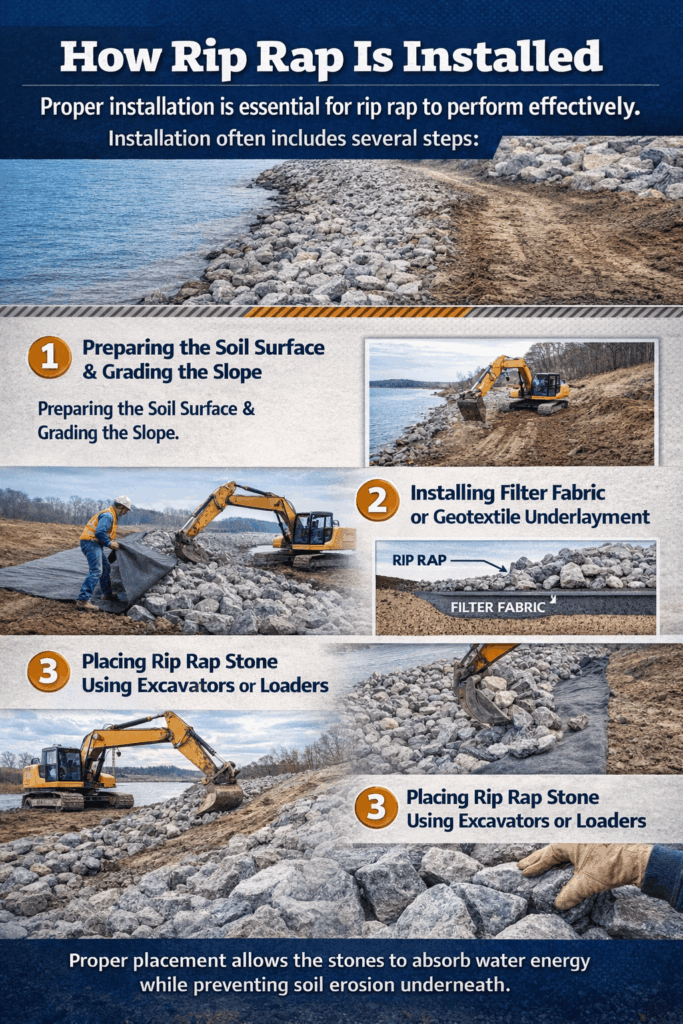
Proper installation is essential for rip rap to perform effectively. Engineers typically design the installation depth and stone size based on water velocity and soil conditions.
Installation often includes several steps.
- Preparing the soil surface and grading the slope
- Installing filter fabric or geotextile underlayment
- Placing rip rap stone using excavators or loaders
- Ensuring stones interlock for stability
Proper placement allows the stones to absorb water energy while preventing soil erosion underneath.
Bulk Rip Rap vs Standard Aggregate
Rip rap differs significantly from smaller aggregates like gravel or crushed stone.
While gravel compacts to create a smooth surface, rip rap functions as a structural barrier. Its large stone size creates gaps that allow water to pass through while dissipating energy.
This combination of permeability and mass makes rip rap ideal for erosion control systems.
Industries That Use Rip Rap
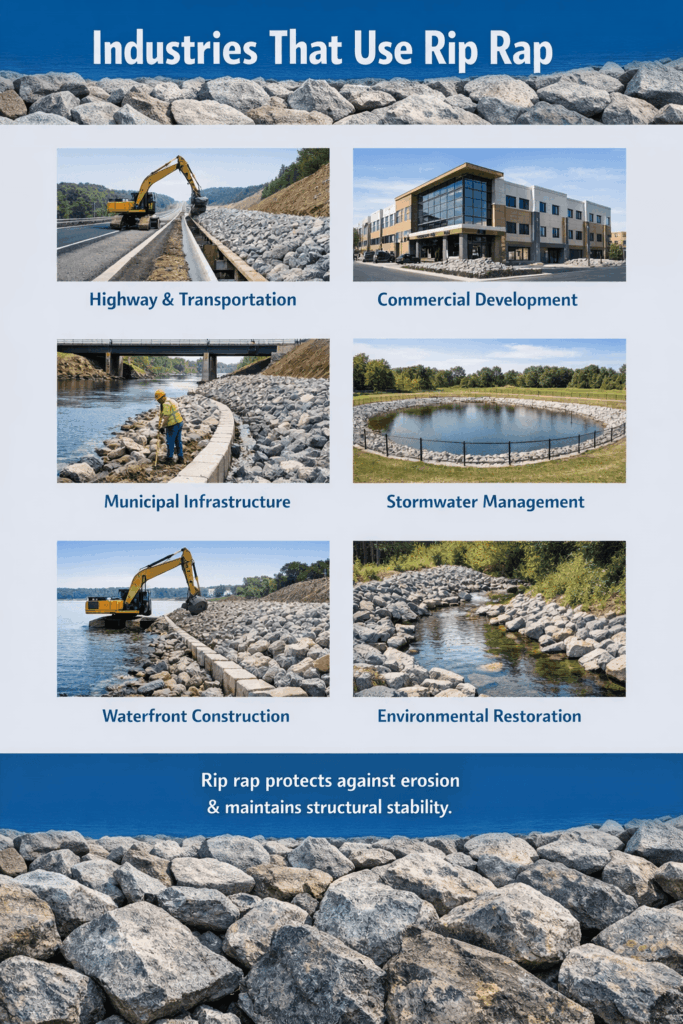
Many industries rely on rip rap supply for large scale projects.
- Highway and transportation construction
- Commercial development
- Municipal infrastructure
- Stormwater management systems
- Waterfront construction
- Environmental restoration projects
In each case, rip rap serves as a protective layer that preserves soil stability and structural integrity.
Working With Aggregate Suppliers
Most builders do not purchase rip rap directly from quarries. Instead they work with aggregate suppliers who manage sourcing and delivery.
Suppliers handle:
- Material sourcing from multiple quarries
- Coordinating truck fleets
- Scheduling deliveries based on project timelines
- Ensuring consistent material quality
This allows contractors to focus on construction while the supplier manages logistics.
Rip Rap Cost Factors
The price of rip rap varies depending on several factors.
- Stone size
- Distance from quarry to job site
- Total quantity ordered
- Delivery method
- Regional availability
Bulk purchases usually reduce the cost per ton, especially when suppliers can coordinate full truckloads.
Environmental Benefits of Rip Rap
Rip rap provides environmental protection by preventing soil erosion and sediment runoff.
Stable shorelines help protect water quality and preserve natural habitats. Many environmental restoration projects rely on rip rap installations to rebuild damaged riverbanks.
When installed correctly, rip rap systems can last for decades with minimal maintenance.
Future Demand for Rip Rap Supply
Infrastructure investment and climate resilience projects continue to increase demand for rip rap stone.
Stormwater management systems, flood protection efforts, and shoreline restoration all rely on bulk rip rap supply.
Contractors and municipalities increasingly depend on reliable aggregate suppliers who can deliver large quantities of stone efficiently.
As construction projects expand across transportation networks and waterfront developments, rip rap will remain one of the most important materials in erosion control engineering.
FAQs About Rip Rap and Bulk Rip Rap
What is rip rap stone used for
Rip rap stone is primarily used for erosion control, shoreline protection, drainage stabilization, and slope reinforcement in construction and infrastructure projects.
What is bulk rip rap
Bulk rip rap refers to large quantities of rip rap stone purchased and delivered for major construction projects. Contractors typically order it by truckload or tonnage.
What size is rip rap stone
Rip rap stones are much larger than standard gravel. Sizes can range from roughly 12 inches up to several feet depending on the project specifications.
How much rip rap do I need
The amount required depends on the area being protected, slope angle, and stone size. Engineers typically calculate the necessary thickness and coverage for erosion control systems.
Where can I buy rip rap near me
Rip rap is typically purchased from aggregate suppliers or stone quarries that specialize in bulk delivery for construction projects.
How is rip rap delivered
Rip rap is usually delivered by dump truck or heavy haul truck depending on the quantity and distance from the quarry.
Is rip rap better than concrete for erosion control
Rip rap is often preferred because it allows water to flow through the stone while reducing erosion pressure. Concrete barriers may redirect water rather than absorb energy.
Does rip rap require maintenance
Properly installed rip rap systems require very little maintenance and can last for decades.
Supply & specification support
For supply, specification assistance, or to discuss project requirements across Indiana, Southwest Michigan, and the south side of Chicagoland, contact Shoreline Aggregate Solutions’ sales team for project-specific guidance and delivery options.
Shoreline Aggregate Solutions
219-878-9991 Office
orders@shorelineaggregate.com
www.shorelineaggregate.com
FROM ROADS, GOLF COURSES, RAILROADS TO SPORTS FIELDS, SHORELINE AGGREGATE SOLUTIONS SUPPLIES LIMESTONE, SAND, AND GRAVEL THROUGHOUT ILLINOIS, INDIANA, AND MICHIGAN. WITH CLEAN TRUCKS, COURTEOUS DRIVERS, AND 35+ YEARS OF EXPERIENCE, WE ENSURE TIMELY, EFFICIENT DELIVERIES. REACH OUT TODAY – WE’RE READY TO SUPPORT YOUR PROJECT.