Every construction project depends on materials that perform reliably under pressure. Foundations must stay stable, roads must carry traffic, drainage systems must move water efficiently, and site work must hold up through years of use. Limestone aggregate plays a critical role in all of these situations, but the success of the material depends heavily on choosing the correct size.
For builders, road construction crews, and golf course superintendents, understanding limestone aggregate sizes is not just a technical detail. It is a practical decision that affects installation speed, compaction quality, drainage performance, and long term durability. Selecting the right stone size helps crews work efficiently and prevents costly rework later in the project.
Bulk aggregate suppliers who understand these differences become valuable partners on the jobsite. When material arrives on time, matches the application, and performs as expected, crews stay productive and projects stay on schedule.
What Limestone Aggregate Sizes Mean
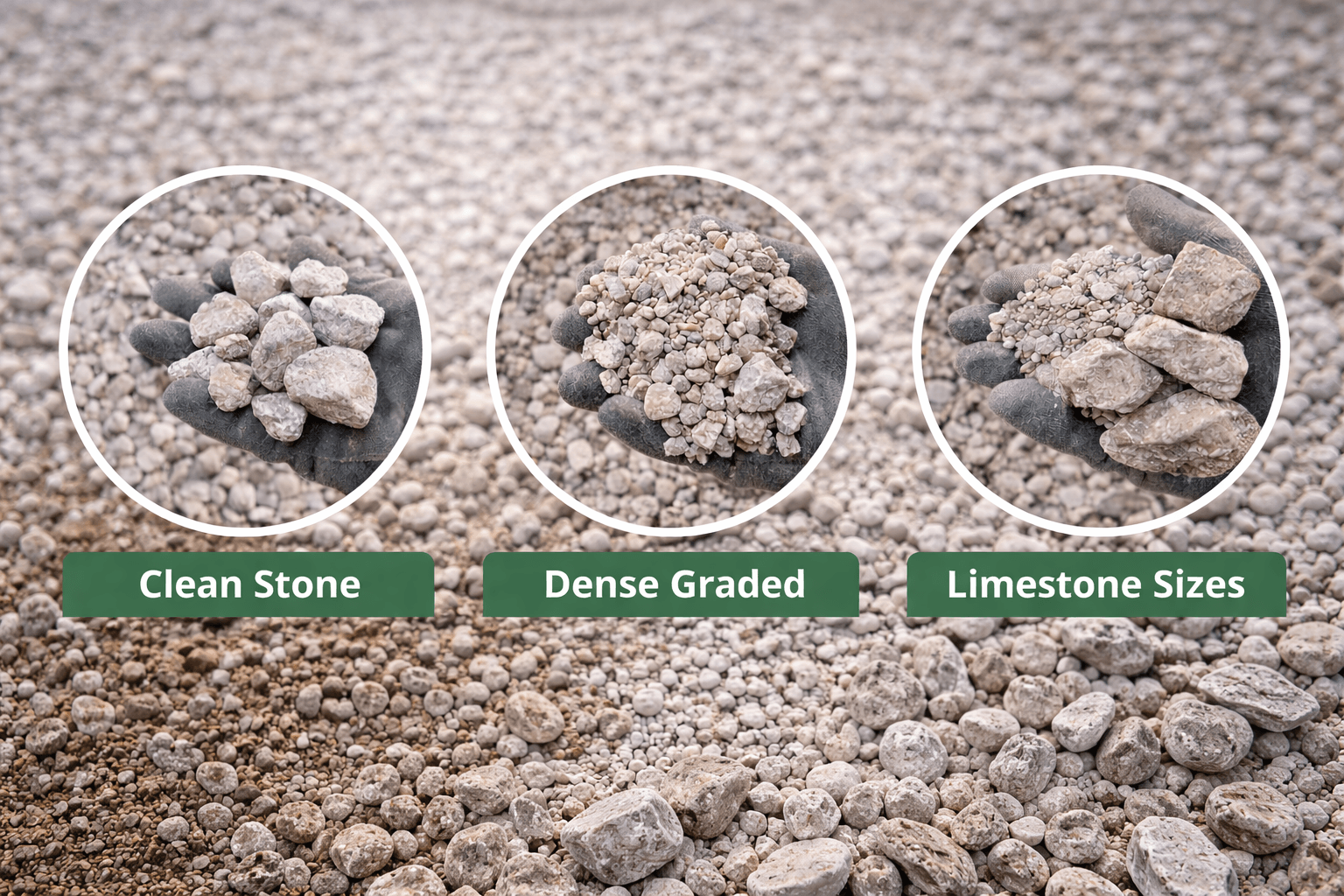
Limestone aggregate sizes refer to the range of stone pieces produced after limestone is crushed and screened. Some materials contain mostly one consistent stone size, while others contain a blend of sizes that allow the material to compact tightly.
Clean stone contains little or no fine particles. This type of stone allows water to move easily through the material and is often chosen for drainage related work.
Dense graded material includes both larger stones and smaller particles. These smaller particles fill the spaces between larger stones and allow the material to compact firmly. This makes dense graded limestone ideal for base layers under roads, parking areas, and structural surfaces.
Choosing the right type depends on the job being performed. Some projects require drainage. Others require strength and compaction. Many commercial projects require both in different areas of the site.
Why Limestone Size Matters on Construction Projects
Using the correct limestone aggregate size can make a significant difference in how smoothly a project runs. Materials that compact properly provide stable foundations. Materials designed for drainage help prevent water buildup around structures. Larger stones can stabilize soft ground and provide structural support for heavy equipment traffic.
When the wrong size stone is used, problems can appear quickly. Surfaces may settle unevenly, drainage systems may clog, or materials may shift under load. Correcting these issues later often requires additional labor, equipment time, and replacement materials.
Builders and contractors who work with experienced aggregate suppliers often avoid these problems. A knowledgeable supplier can help match the right material to the job and coordinate deliveries so crews always have what they need.
Common Limestone Aggregate Sizes Used in Commercial Construction
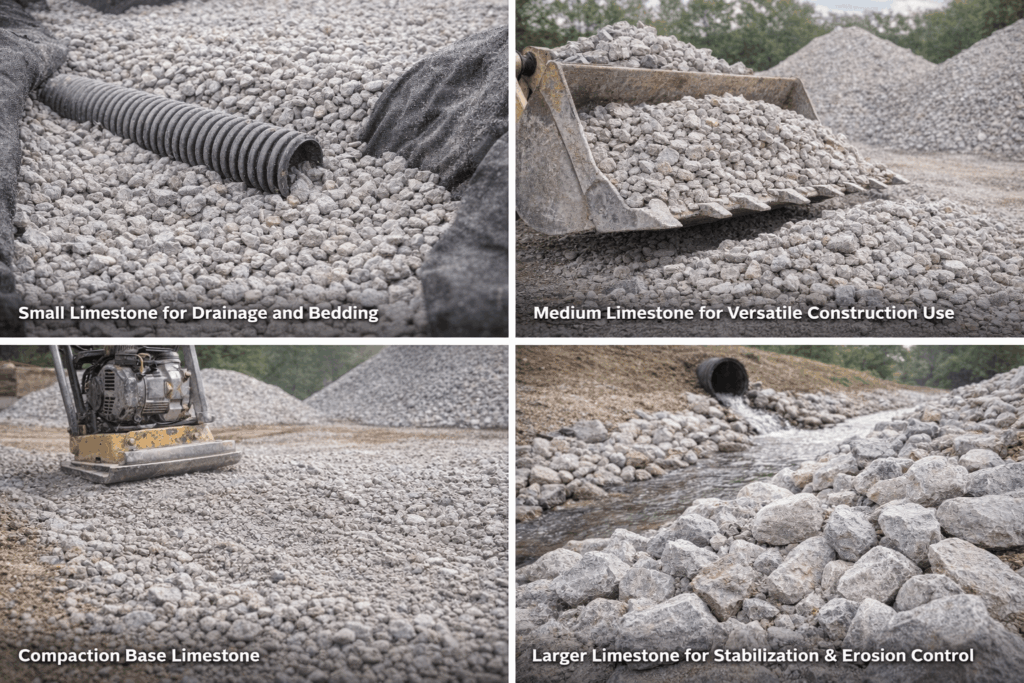
Small Limestone for Drainage and Bedding
Smaller limestone aggregate is frequently used where water movement is important. These stones are commonly placed around drainage pipe, behind retaining walls, or around foundations where moisture must move away from the structure.
The angular shape of crushed limestone helps the stones lock together while still leaving open space for water to pass through. This balance of stability and drainage makes smaller stone sizes useful for a wide range of site development tasks.
Medium Limestone for Versatile Construction Use
Medium sized limestone aggregate is often one of the most commonly used materials on commercial construction sites. It is large enough to provide good drainage while still being manageable for placement and grading.
This type of material is commonly used for general backfill, drainage zones, concrete production, and structural fill in certain applications. Contractors value it because it performs reliably across many different types of work.
Compaction Base Limestone
Many construction projects require a compactable base beneath roads, parking lots, concrete slabs, or other finished surfaces. In these cases, limestone that contains a mix of stone sizes and fine particles is typically used.
The smaller particles fill the gaps between larger stones, allowing the material to lock together during compaction. This creates a firm foundation capable of supporting heavy loads and repeated traffic.
When properly installed and compacted, this type of base layer becomes the structural backbone of many construction projects.
Larger Limestone for Stabilization
Some sites present challenging soil conditions. Wet ground, unstable soils, or heavy construction equipment can create problems if the base material is not strong enough. Larger limestone stones are often used in these situations to stabilize the ground.
These stones help distribute weight and create a solid working platform for equipment and construction crews. Once stabilization is achieved, additional layers of smaller material can be placed above to complete the base.
Large Stone for Erosion Control
Large limestone pieces are commonly used for erosion control and shoreline protection. When placed along slopes, drainage channels, or water edges, these stones help slow water movement and prevent soil loss.
On commercial projects, erosion control stone is often used around culverts, drainage outlets, retention ponds, and shoreline areas where water flow must be managed.
Limestone Use on Building Projects
Builders rely on limestone aggregate in many stages of a project. Foundations require stable backfill and drainage systems. Parking areas and access drives need strong base layers. Utility trenches require supportive bedding materials that protect pipes and allow proper drainage.
Each stage may use a different aggregate size. A compactable base might support a parking area while a clean stone provides drainage around a structure. The ability to source multiple materials from one supplier simplifies logistics and keeps projects moving forward.
Reliable delivery also matters. When crews are scheduled to excavate, install utilities, or prepare a base for paving, they depend on timely material deliveries. Delays in material supply can slow down an entire jobsite.
Limestone for Road Construction
Road construction projects often require several types of limestone aggregate throughout the construction process. Larger stone may be used to stabilize soft soil conditions. Dense graded limestone provides a compactable base layer beneath pavement. Drainage stone may be used around culverts or stormwater infrastructure.
Because roads must support repeated vehicle traffic and heavy loads, the correct aggregate selection is essential. Each layer contributes to the strength and longevity of the finished roadway.
Contractors working on road projects typically depend on suppliers who can deliver bulk quantities of stone quickly and consistently. Having a reliable material partner helps ensure that road building operations stay on schedule.
Limestone on Golf Course Projects
Golf course construction and renovation projects also depend on bulk aggregate materials. Limestone is frequently used for cart path foundations, maintenance access roads, drainage improvements, and structural site work around club facilities.
Golf course superintendents often need materials that perform well while also protecting the surrounding landscape. Proper drainage, stable surfaces, and careful material placement are important factors in maintaining course conditions.
When bulk aggregate deliveries are coordinated properly, crews can complete projects efficiently while minimizing disruption to the course.
Clean Stone Compared to Compactable Stone
One of the most important distinctions in limestone aggregate is the difference between clean stone and compactable stone.
Clean stone contains little fine material. Because of this, water can flow through it easily. It is commonly used in drainage related applications.
Compactable limestone contains a mixture of larger stones and smaller particles. When compacted, these materials lock together to form a stable base capable of supporting heavy loads.
Understanding this difference helps contractors select the right material for each layer of the project.
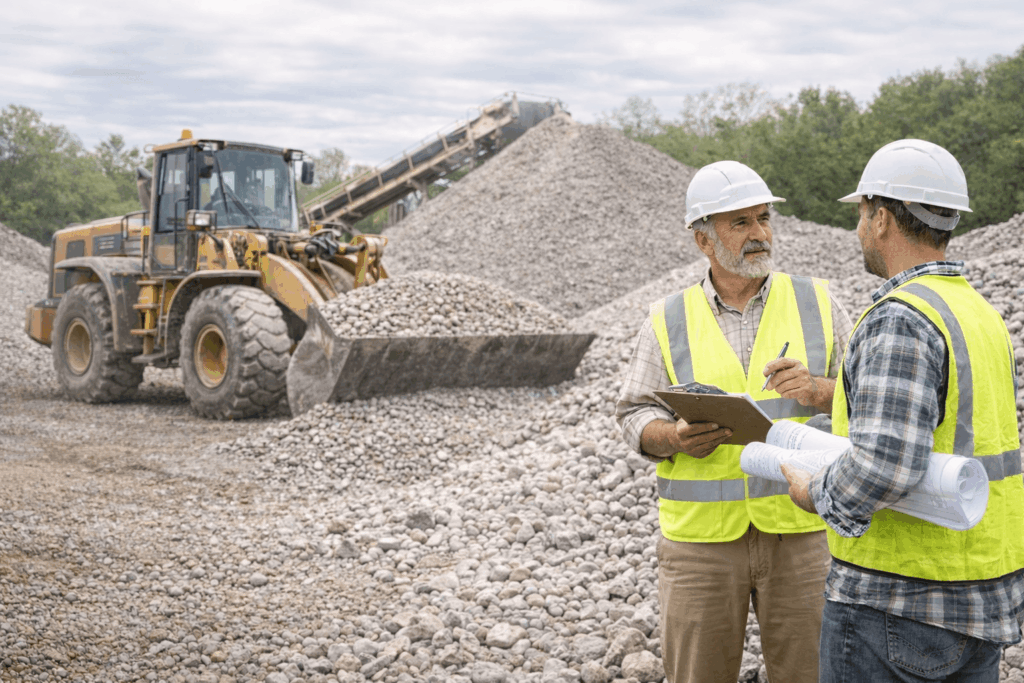
Choosing the Right Limestone for Your Project
Selecting the correct aggregate often begins with understanding the purpose of the material. Is the stone needed for drainage or compaction? Will it support a road, a parking lot, or a utility installation? What type of soil conditions exist at the site?
These questions help determine which material will perform best. Experienced suppliers can also help guide buyers through the selection process, making sure the material ordered matches the demands of the job.
Clear communication between contractors and suppliers ensures that the correct material arrives at the right time and in the correct quantity.
The Importance of Reliable Bulk Delivery
Construction schedules depend heavily on consistent material supply. Excavation, grading, paving, and infrastructure installation often follow a precise sequence. When materials arrive on time, crews stay productive and projects move forward smoothly.
Bulk aggregate delivery requires coordination, equipment, and experience. Suppliers must maintain reliable trucking capacity, communicate with jobsite managers, and ensure that material is available when needed.
For contractors managing large projects, working with a dependable aggregate supplier can reduce stress and keep operations running efficiently.
Working With an Experienced Aggregate Supplier
Successful construction projects rely on partnerships. Builders, engineers, contractors, and material suppliers each contribute to the outcome of the project.
An experienced aggregate supplier understands construction timelines, equipment needs, and site conditions. They help customers select the right materials and coordinate deliveries that match the pace of the project.
Whether the job involves building foundations, preparing road bases, improving drainage systems, or supporting golf course construction, dependable material supply plays a key role in the final result.
Limestone aggregate remains one of the most widely used construction materials because of its strength, versatility, and availability. When the correct size is chosen and delivered by a reliable supplier, it becomes a foundation that supports the success of the entire project.
Frequently Asked Questions
What is limestone aggregate used for?
Limestone aggregate is used for a wide range of construction purposes including road bases, drainage systems, foundation support, erosion control, and general site development.
Why are different limestone sizes used in construction?
Different sizes serve different purposes. Smaller stone may be used for drainage while dense graded material is used where compaction and structural support are required.
Is limestone good for drainage?
Clean crushed limestone allows water to move through the material easily, which makes it suitable for drainage systems and backfill applications.
Can limestone be used for road construction?
Yes. Limestone is widely used in road construction for base layers, stabilization, and drainage infrastructure.
How is limestone delivered to construction sites?
Limestone is typically delivered in bulk by dump trucks or similar hauling equipment. Reliable delivery scheduling helps ensure that crews always have material available when needed.
Can golf courses use limestone aggregate?
Yes. Golf courses often use limestone for cart path bases, drainage improvements, maintenance roads, and other structural areas throughout the property.
Supply & specification support
For supply, specification assistance, or to discuss project requirements across Indiana, Southwest Michigan, and the south side of Chicagoland, contact Shoreline Aggregate Solutions’ sales team for project-specific guidance and delivery options.
Shoreline Aggregate Solutions
219-878-9991 Office
orders@shorelineaggregate.com
www.shorelineaggregate.com
FROM ROADS, GOLF COURSES, RAILROADS TO SPORTS FIELDS, SHORELINE AGGREGATE SOLUTIONS SUPPLIES LIMESTONE, SAND, AND GRAVEL THROUGHOUT ILLINOIS, INDIANA, AND MICHIGAN. WITH CLEAN TRUCKS, COURTEOUS DRIVERS, AND 35+ YEARS OF EXPERIENCE, WE ENSURE TIMELY, EFFICIENT DELIVERIES. REACH OUT TODAY – WE’RE READY TO SUPPORT YOUR PROJECT.