If you build roads, pour concrete, shape drainage, stabilize a pad, or maintain a golf course, you already know something simple that gets overlooked all the time. The success of the project usually starts long before the first piece of equipment arrives on site. It starts with material selection, material consistency, and whether your supplier can actually deliver what was promised when the crew is ready.
That is why construction aggregate products matter so much. They are not just piles of rock, sand, and gravel. They are the base under roads, the structure inside concrete, the drainage behind retaining areas, the support beneath pavers, and the material that keeps schedules moving instead of stalling out. For builders, superintendents, estimators, and purchasing teams, aggregate is one of those categories where a bad decision can create expensive problems fast.
The right supplier helps prevent those problems. A dependable aggregate supplier gives you more than a price sheet. You need access to the right products, honest guidance on where each material belongs, and bulk aggregate delivery that lines up with the pace of the job. You need a partner who understands that a road crew, a site contractor, and a golf course superintendent may all order aggregate, but they are not solving the same problem.
This guide is built for that reality. If you are sourcing construction aggregate products for a commercial build, a road project, utility work, drainage, asphalt, concrete, or golf course work, this article will walk through what matters most. We will cover the main product categories, where each material is commonly used, what to ask before ordering, and how to choose a supplier and delivery partner that makes your work easier instead of harder.
What Are Construction Aggregate Products?
Construction aggregate products are granular materials used in building and infrastructure work. In practical terms, that usually means crushed stone, sand, gravel, limestone, specialty base materials, and in some cases recycled aggregate or slag based material. These materials can be used by themselves or combined with cement, asphalt, or other binders depending on the job.
That broad definition sounds simple, but builders know the category is much more detailed than it appears. Aggregate is not one product. It is a family of products with very different performance characteristics. Size, shape, gradation, cleanliness, fines content, hardness, drainage behavior, compaction ability, and source geology can all affect how the material performs once it reaches the site.
That is why experienced contractors do not order by guessing. They buy based on application. A material that works perfectly under a road base may be the wrong choice for drainage stone. A washed aggregate that drains well may not compact the way a blended base does. A bunker sand that performs well on a golf course is not the same product you would want under a slab or utility trench backfill.
When people search for construction aggregate products, they are often trying to solve one of a few common needs. They may need a base material for roads or parking lots. They may need concrete aggregate for a pour. They may need drainage stone, backfill, rip rap, railroad ballast, limestone, mason sand, structural sand, bunker sand, pea gravel, or bulk gravel delivery for an active project. The supplier that can sort those needs clearly becomes far more valuable than one that only lists product names with no guidance.
Why Builders Care About Aggregate Quality So Much
Builders are not buying aggregate just to fill space. They are buying performance. A subgrade that does not lock up correctly can create movement. Drainage stone with the wrong fines content can reduce water flow. Concrete aggregate that is inconsistent can affect finish quality and strength behavior. A golf course bunker sand that looks good but plays poorly will create complaints and rework.
That is why quality matters beyond appearance. Consistent aggregate helps with compaction, drainage, grading, load support, surface stability, and long term durability. It helps crews work faster because the material behaves the way they expect. It also protects budgets, because poor material can create double handling, reordering, job delays, failed inspections, and callbacks.
For road contractors, the stakes are obvious. The wrong base can impact stability and surface life. For site contractors, inconsistent fill or base can slow production and create uneven results across a large project. For concrete crews, aggregate selection plays a major role in mix behavior and finish expectations. For golf course teams, sand selection affects drainage, ball response, maintenance, and player experience.
In other words, aggregate is not a low importance purchase. It is a foundation purchase. That changes how smart builders choose suppliers.
Main Types of Construction Aggregate Products
Every region has its own naming conventions and state specifications, but most builders work from a familiar set of categories. Understanding these categories helps you order faster and avoid mismatches between what was quoted and what the job actually needs.
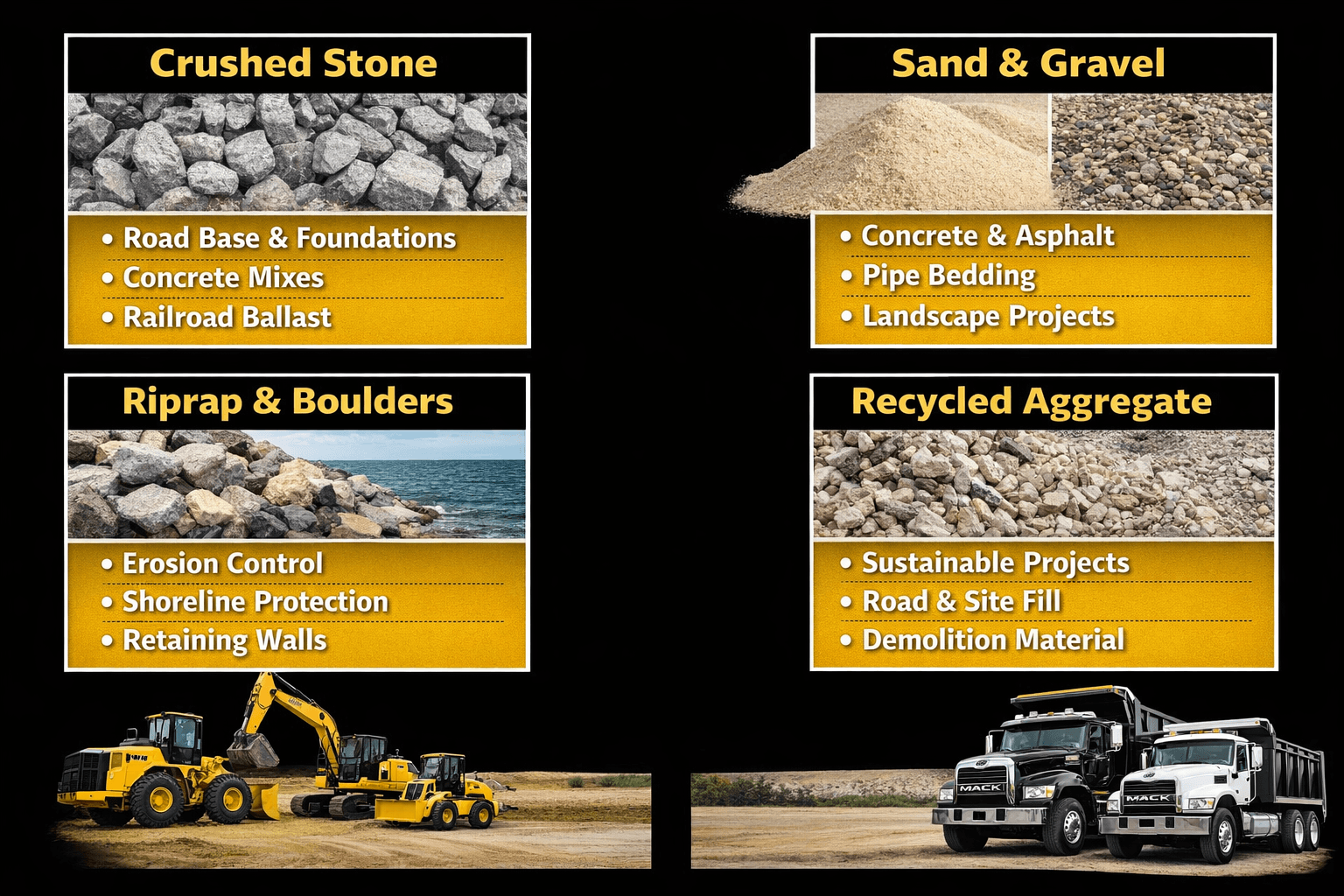
Crushed Stone
Crushed stone is one of the most common construction aggregate products in the market. It is used for base layers, road construction, drainage, concrete production, and a wide range of structural applications. Because it is mechanically crushed, it usually has angular faces that help it lock together well.
Crushed stone may be sold in different sizes and blends depending on local standards. Some products include fines for compaction. Others are washed and more open graded for drainage. Common builder needs in this category include base stone, driveway stone, drainage stone, and specialty products like railroad ballast or rip rap.
Limestone
Limestone is a major category in many construction markets because it is versatile, widely specified, and available in many gradations. Builders use limestone for road base, concrete aggregate, parking lot base, under slab support, trench backfill, and general site work. Different sizes may be suited for compacted base, clean stone drainage, or decorative and edge applications depending on the project.
For many commercial and road jobs, limestone is the workhorse material. A supplier that carries multiple limestone products and understands which one fits the application can save a buyer a lot of time.
Sand
Sand is another major category, but it is far from one size fits all. Construction sand may include mason sand, concrete sand, fill sand, structural sand, washed sand, bunker sand, and specialty sands for drainage or sports surfaces. The differences matter. Grain shape, particle size distribution, cleanliness, and drainage performance can change how the sand performs in the field.
For builders, sand may be used in concrete, under pavers, utility bedding, leveling, trench backfill, or finish applications. For golf course superintendents, bunker sand is its own category and should be sourced with playability and maintenance in mind, not just color.
Gravel
Gravel is commonly used for access roads, drainage, backfill, decorative areas, temporary surfaces, and utility support depending on size and source. Rounded gravel behaves differently from angular crushed materials, so it is important to match the product to the purpose. Builders often need gravel when drainage and coverage matter more than tight compaction.
Rip Rap and Large Stone
Rip rap is used where erosion control and slope protection are critical. Shorelines, culvert outlets, embankments, drainage channels, and other high water movement areas often require larger stone. The right sizing matters because undersized material can shift or wash out. For contractors doing erosion control work, dependable rip rap availability can make or break the schedule.
Recycled Aggregate and Specialty Materials
In some markets, recycled aggregate, crushed concrete, slag, and other specialty products may be appropriate depending on the specification and application. These can offer value and practical performance when selected correctly. Not every job allows them, but for the right project they may be worth considering.
Where Construction Aggregate Products Are Used
One reason aggregate searches are so competitive is that these materials serve a huge range of end uses. Builders are usually not searching out of curiosity. They are searching because they have a live need tied to a job. A supplier that speaks directly to those applications earns attention faster.
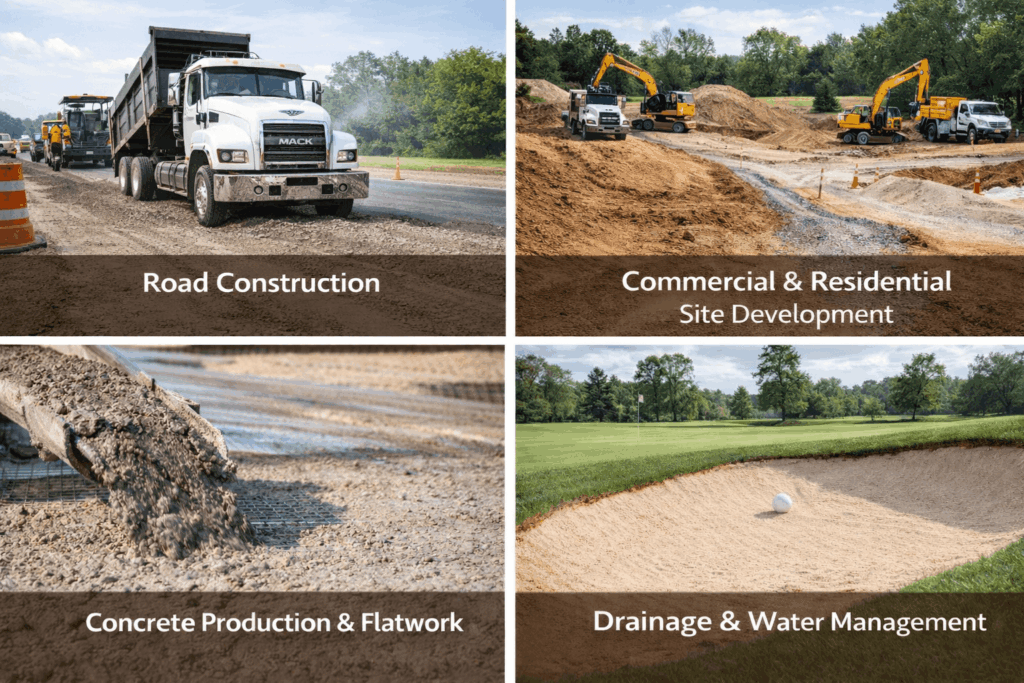
Road Construction
Road crews need aggregate for subbase, base, asphalt production, shoulder support, drainage layers, and erosion control. Material consistency, gradation, and delivery timing matter because road work is production driven. Delays cost labor, equipment time, and often traffic control costs too.
If your company supplies road construction aggregate, it helps to show that you understand staged deliveries, specification driven ordering, and the difference between a clean stone and a compactable base. Buyers in this segment want confidence, not vague marketing.
Commercial and Residential Site Development
Site contractors rely on aggregate for building pads, parking lots, trench backfill, utility work, grading, retaining support, and drainage systems. On these jobs, the supplier often becomes part of the daily workflow. Fast turnaround, truck availability, accurate product selection, and predictable load quality all matter.
This is where bulk aggregate delivery becomes a major selling point. A builder may not simply want material. They want the right material on the right day in the right quantity so the site does not stop moving.
Concrete Production and Flatwork
Aggregate is a core ingredient in concrete. That means concrete contractors and ready mix related buyers care deeply about stone and sand quality. Variability can affect mix design, workability, finish quality, and overall consistency. A supplier that understands concrete aggregate products is often more attractive than one that treats concrete customers the same as landscape buyers.
Drainage and Water Management
Drainage applications require materials that allow water movement while maintaining structural support where needed. Builders may need washed stone, bedding material, pipe surround, filter layers, or larger stone for outlets and channels. The key is matching the aggregate to the drainage design rather than assuming any stone will do.
Golf Courses and Sports Facilities
Golf course superintendents and sports facility managers often need aggregate products that differ from standard road work materials. Bunker sand, drainage stone, root zone support materials, path aggregate, and decorative stone may all come into play. This audience values performance, appearance, drainage behavior, and maintenance practicality. They also value suppliers who understand that golf course work is highly visible and often time sensitive.
What Smart Buyers Look For in an Aggregate Supplier
Price matters. Every buyer knows that. But experienced builders rarely choose an aggregate supplier on price alone. They are looking at the total cost of doing business. That includes whether the material is right, whether deliveries show up, whether loads are consistent, and whether the supplier is easy to work with when schedules change.
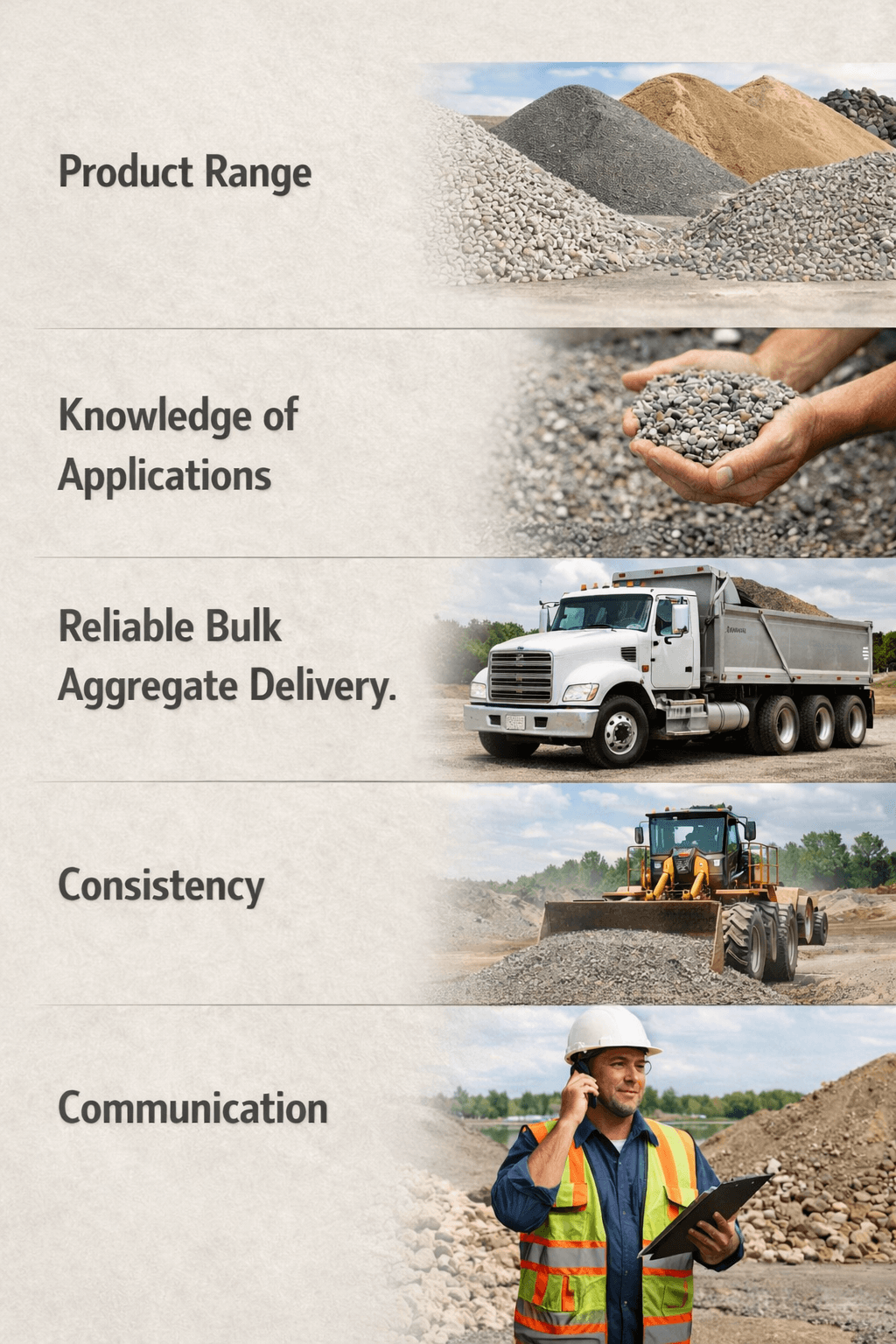
Product Range
A strong supplier should offer a broad mix of construction aggregate products, not just one or two basic materials. Builders often prefer fewer vendors when possible. If one supplier can handle limestone, crushed stone, sand, gravel, rip rap, and specialty materials, it reduces friction and simplifies purchasing.
Knowledge of Applications
Buyers want to talk to someone who understands the difference between drainage stone and base stone, bunker sand and mason sand, compactable blend and washed aggregate. When a supplier can make useful recommendations, the buyer gains confidence fast.
Reliable Bulk Aggregate Delivery
This is one of the biggest decision points in the market. If a supplier sells bulk aggregates but struggles with dispatch, truck coordination, or communication, the relationship usually becomes frustrating. Reliable delivery is not a bonus feature. It is part of the product.
Builders want to know how quickly material can be delivered, whether split loads or scheduled drops are possible, and how the supplier handles changing job conditions. Golf course teams may need carefully timed deliveries to avoid disrupting play or ongoing maintenance. Road crews may need coordinated truck flow to keep production moving. Good suppliers think through those realities.
Consistency
Consistency means the product delivered today matches what the crew used last week. That matters for compaction results, appearance, drainage, and planning. It also builds trust. When builders do not have to second guess the load, they are more likely to keep ordering.
Communication
Simple, clear communication wins business. Buyers appreciate quick answers on availability, load size, lead time, and application fit. They also remember which suppliers helped solve a problem instead of making the process harder.
How Bulk Aggregate Delivery Creates Real Value
A lot of companies claim to sell aggregate. Far fewer make delivery feel easy. That matters because most contractors are not shopping for a pile of material at a yard. They are buying jobsite support.
Bulk aggregate delivery creates value in several ways. First, it saves labor and transport coordination on the buyer side. Second, it allows the project team to keep crews focused on production instead of arranging pickup and chasing loads. Third, it helps the buyer control ordering by volume and schedule, which can reduce waste and repeat trips.
For active construction jobs, delivery timing can be just as important as unit price. A lower number on paper is not a good deal if the crew stands around waiting. That is why many buyers are really searching for an aggregate supplier with dependable delivery, even if they phrase the search around materials instead of logistics.
From a sales perspective, this is one of the strongest opportunities for a bulk aggregate supplier. Do not just describe your products. Show that you understand job flow. Talk about fast delivery, scheduled loads, dependable truck access, honest communication, and service that helps builders stay on track.
How to Choose the Right Aggregate for the Job
Not every buyer arrives with a spec sheet. Many are trying to confirm what product they actually need before placing an order. That means your content and your sales process should help them make the decision with less stress.
- Start with the application. Is the material for base, drainage, concrete, asphalt, backfill, erosion control, or golf course use?
- Confirm whether compaction or drainage is the priority. This narrows the field quickly.
- Ask about size and cleanliness. Is a washed product needed, or is a blend with fines more appropriate?
- Check local or project specifications. Public work and engineered jobs may have exact requirements.
- Review delivery access and quantity. Some jobs need one load. Others need phased delivery over days or weeks.
This kind of decision support is what turns a material vendor into a go to supplier. It also improves lead quality, because the buyer reaches out with greater clarity and stronger intent.
Construction Aggregate Products That Commonly Drive the Best Leads
Some aggregate searches are broad research terms. Others come from buyers who are close to ordering. In practical sales terms, the most valuable opportunities usually come from products tied to active construction work and clear delivery needs.
- Limestone for road base, parking lots, and under slab support
- Crushed stone for base, drainage, and structural fill
- Concrete sand and structural sand for building and utility work
- Mason sand for finish and masonry related uses
- Rip rap for erosion control and shoreline or channel protection
- Railroad ballast and specialty stone for infrastructure jobs
- Pea gravel and washed gravel for drainage and select finish uses
- Golf bunker sand and golf course aggregate products for sports facilities
- Recycled aggregate where specifications and budgets allow it
- Bulk aggregate delivery for builders who need material moved to site without delays
If your company serves builders, road contractors, and golf course teams, these are the categories that tend to create the most relevant conversations. They connect directly to real jobs, recurring orders, and buyers who care about supplier reliability.
What Makes One Supplier More Trustworthy Than Another
Trust in this industry is not built through slogans. It is built through useful answers and repeatable performance. Builders trust suppliers who know their products, understand applications, communicate clearly, and deliver consistently.
That trust grows even faster when the supplier makes buying easier. Clear product descriptions, transparent guidance, straightforward contact options, and fast response times all matter. So does showing the audience that you work with builders like them. A road contractor wants to know you understand roads. A golf course superintendent wants to know you understand playability and drainage. A site contractor wants to know you can keep up with the pace of the job.
Many aggregate websites miss that point. They talk about being family owned, experienced, or high quality, but they do not translate those claims into buyer outcomes. The better approach is to show exactly how you help. Faster delivery. Better material matching. Consistent loads. Broad product access. Real support from people who understand construction.
How to Turn Aggregate Interest Into Qualified Leads
If your goal is lead generation, the article should not read like a textbook. It should feel useful, practical, and connected to the buyer’s real decisions. The best pages in this space do a few things well. They define the product clearly. They explain common uses. They make the supplier feel credible. They reduce confusion around product selection. And they make it easy to take the next step.
For a bulk aggregate supplier, that next step is usually a quote request, a delivery conversation, or a call about product fit. The language should support that naturally. Builders do not want fluff. They want confidence that you can help them choose the right material and get it where it needs to go.
That means your closing message should be simple and direct. If you need construction aggregate products for an upcoming job, contact us for product guidance, availability, pricing, and bulk aggregate delivery. Whether you need limestone, crushed stone, sand, gravel, rip rap, or golf course materials, we help builders get the right aggregate to the site without wasting time.
Final Thoughts
Construction aggregate products may look basic from the outside, but builders know better. These materials influence stability, drainage, finish quality, project speed, maintenance, and long term performance. The supplier you choose influences all of that too.
If you are buying for a commercial build, a road project, a site package, or a golf course improvement plan, the goal is not simply to find aggregate. The goal is to find the right aggregate supplier with the inventory, product knowledge, and bulk aggregate delivery support to keep your project moving.
The best supplier relationship saves more than money. It saves time, cuts confusion, reduces risk, and helps your crew stay productive. That is what builders are really looking for when they search for construction aggregate products. They want materials they can trust, delivered by people who know the work.
When your next job calls for limestone, crushed stone, gravel, sand, rip rap, or specialty aggregate products, work with a supplier who understands the application and the schedule. That is how better jobs get built.
FAQs About Construction Aggregate Products
What are construction aggregate products
Construction aggregate products are materials such as crushed stone, sand, gravel, limestone, rip rap, and related specialty materials used in roads, concrete, drainage, base work, and site development.
What is the difference between aggregate and gravel
Aggregate is the broader category. Gravel is one type of aggregate. Aggregate can also include crushed stone, sand, limestone, recycled materials, and large erosion control stone depending on the application.
What aggregate is best for road base
The best road base aggregate depends on the specification and project conditions, but many road jobs use a well graded crushed stone or limestone product that compacts tightly and provides stable support.
What aggregate is best for drainage
Drainage applications usually require a clean, washed aggregate with minimal fines so water can move through the material more easily. The exact size depends on the system design and intended use.
Can I use the same sand for concrete and golf bunkers
No. Concrete sand and golf bunker sand are selected for very different performance needs. Concrete work focuses on mix behavior and construction performance, while bunker sand is chosen for drainage, playability, maintenance, and appearance.
Why does bulk aggregate delivery matter so much
Bulk aggregate delivery matters because jobs depend on timing. Reliable delivery keeps crews working, reduces delays, and helps builders avoid the cost of rescheduling labor and equipment.
How do I choose the right aggregate supplier
Look for a supplier with a broad product range, strong material knowledge, consistent quality, reliable delivery, and clear communication. The best suppliers help you select the right product instead of just taking an order.
Do golf courses need specialty aggregate products
Yes. Golf courses often need specialty sands, drainage stone, path materials, and other products selected for performance and appearance. A supplier familiar with golf course work can be especially helpful.
Supply & specification support
For supply, specification assistance, or to discuss project requirements across Indiana, Southwest Michigan, and the south side of Chicagoland, contact Shoreline Aggregate Solutions’ sales team for project-specific guidance and delivery options.
Shoreline Aggregate Solutions
219-878-9991 Office
orders@shorelineaggregate.com
www.shorelineaggregate.com
FROM ROADS, GOLF COURSES, RAILROADS TO SPORTS FIELDS, SHORELINE AGGREGATE SOLUTIONS SUPPLIES LIMESTONE, SAND, AND GRAVEL THROUGHOUT ILLINOIS, INDIANA, AND MICHIGAN. WITH CLEAN TRUCKS, COURTEOUS DRIVERS, AND 35+ YEARS OF EXPERIENCE, WE ENSURE TIMELY, EFFICIENT DELIVERIES. REACH OUT TODAY – WE’RE READY TO SUPPORT YOUR PROJECT.