

Bunker sand is one of the most important materials on a golf course. The right golf bunker sand affects playability, maintenance requirements, drainage, and the visual identity of a course. Golf course superintendents and course architects spend significant time selecting bunker sand because it directly impacts how bunkers perform after rain, during dry conditions, and under heavy play.
Not all sand is suitable for golf bunkers. Golf bunker sand must provide consistent ball support, proper drainage, and stability on bunker faces while maintaining a clean and attractive appearance.
When courses begin a bunker renovation or a new golf course construction project, the selection of bunker sand becomes one of the most important decisions in the entire process.
What Is Bunker Sand
Bunker sand is a specialized golf course sand used in sand bunkers and hazards throughout a golf course. Unlike general construction sand, bunker sand is selected based on particle size distribution, angularity, drainage characteristics, and playability.
Golf bunker sand must allow golfers to strike the ball cleanly while preventing the ball from plugging too deeply. At the same time, it must drain quickly after rain so bunkers can return to playable conditions quickly.
According to golf turf research, most bunker sand particles should fall between approximately 0.25 and 1 millimeter in diameter to provide ideal performance and drainage.
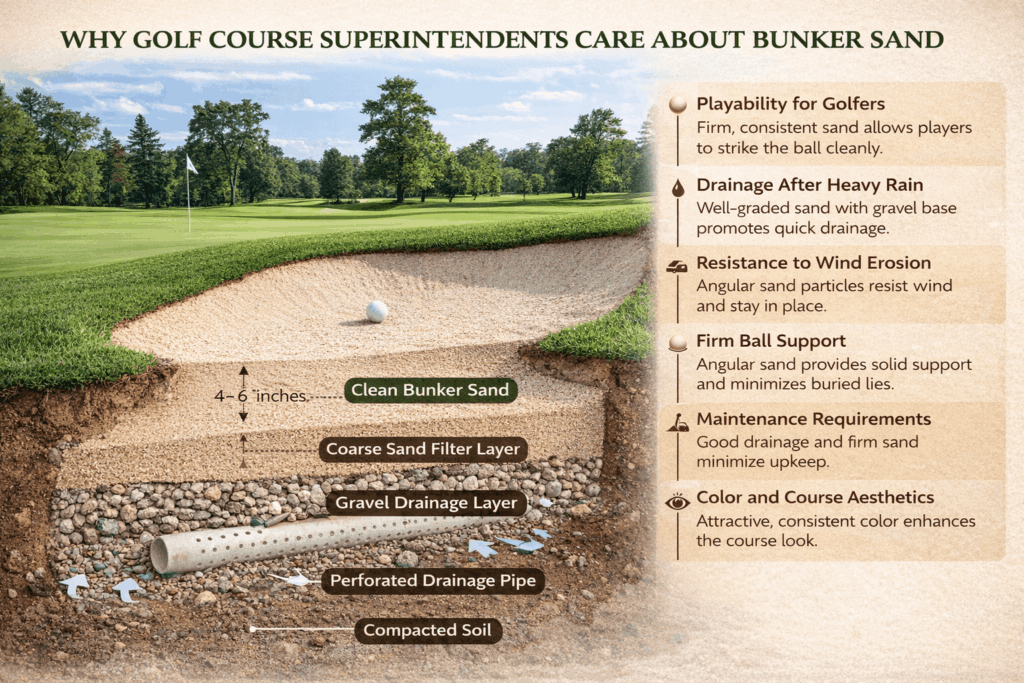
Why Golf Course Superintendents Care About Bunker Sand
Golf bunkers are strategic features that influence shot selection and course difficulty. Poor bunker sand can quickly create maintenance problems such as crusting, poor drainage, and inconsistent lies.
Superintendents evaluating bunker sand typically consider several factors:
- Playability for golfers
- Drainage after heavy rain
- Resistance to wind erosion
- Firm ball support
- Maintenance requirements
- Color and course aesthetics
A well selected bunker sand allows a course to maintain consistent playing conditions while minimizing long term maintenance costs.
Types of Bunker Sand Used on Golf Courses
There are several common types of bunker sand used by golf courses, depending on local conditions and design preferences.
Silica Bunker Sand
Silica sand is commonly used for golf bunkers because the grains are hard and resistant to weathering. This helps the sand maintain its shape and performance over time.
Silica bunker sand is often chosen for championship courses due to its durability and predictable playability.
Blended Bunker Sand
Some bunker sands combine natural sand with crushed materials such as limestone to achieve specific drainage or firmness characteristics. Blended sands can offer improved slope stability and aesthetic color.
Angular Bunker Sand
Angular sand particles interlock better than rounded particles. This improves stability on steep bunker faces and reduces the chance of buried lies. Angular grains also help the sand stay in place during heavy rain or irrigation.
Popular Bunker Sand Products for Golf Courses
Many golf courses choose bunker sand products designed specifically for playability and drainage performance. Examples include:
- Chesapeake bunker sand
- Best Ball bunker sand
- Riviera bunker sand
These bunker sand products are designed to provide consistent playing conditions, reliable drainage, and visual contrast that enhances the appearance of the course.
Key Characteristics of High Quality Bunker Sand
The best sand for golf bunkers shares several important characteristics.
Particle Size Distribution
Particle size distribution plays the largest role in bunker performance. Most bunker sands contain a majority of particles between 0.1 and 1 millimeter to balance drainage with stability.
Too many fine particles can cause crusting and poor drainage. Too many coarse particles can create unstable bunker surfaces.
Low Silt and Clay Content
High quality bunker sand contains very little silt or clay. Excess fines reduce drainage and cause the bunker surface to become compacted or crusted.
Angular Particle Shape
Angular particles create better stability and ball support compared with round particles. This allows golfers to strike bunker shots cleanly while maintaining consistent lies.
Drainage Performance
Golf course bunkers must drain quickly after rainfall. Sands with appropriate particle distribution allow water to move through the bunker and into the drainage system below.
How Deep Should Bunker Sand Be
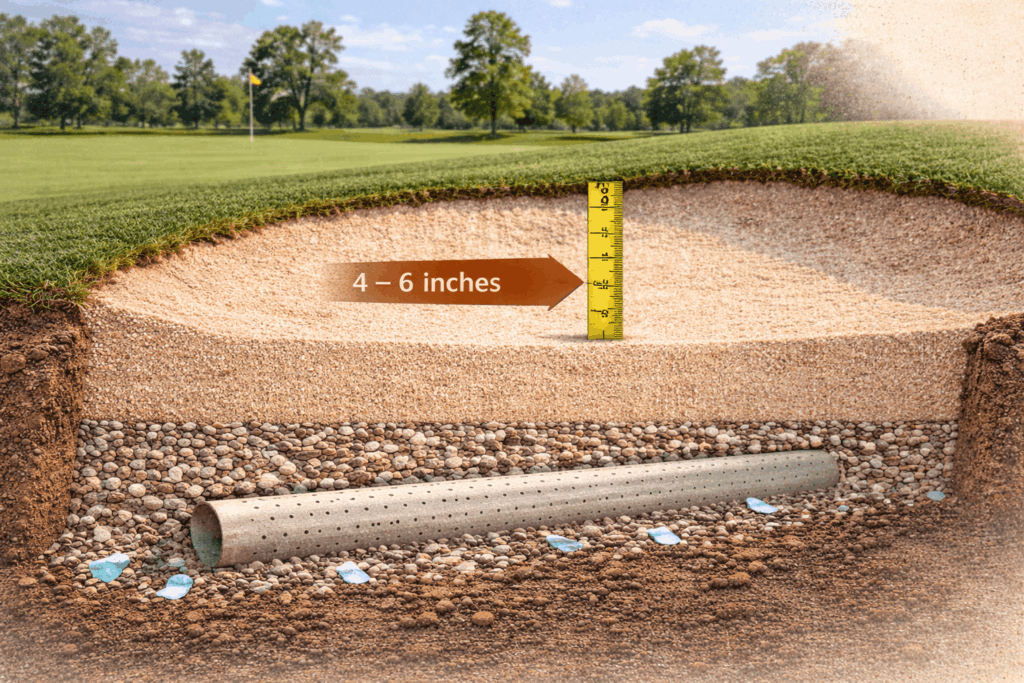
Bunker sand depth affects both playability and drainage. Most golf course bunkers perform well with approximately four to six inches of sand on the bunker floor, although deeper installations may be recommended depending on bunker liner systems and drainage design.
Consistent depth throughout the bunker is critical for maintaining predictable playing conditions.
Golf Bunker Sand for Course Renovation Projects
Bunker renovations are one of the most common golf course improvement projects. Many courses replace bunker sand every several years due to contamination, loss from wind, or performance issues.
During bunker renovations, golf course architects and superintendents evaluate:
- Drainage system condition
- Bunker liner options
- Sand depth
- Bunker sand performance
- Maintenance costs
Replacing bunker sand with a modern high performance sand can dramatically improve playability and reduce maintenance.
Bulk Bunker Sand Delivery for Golf Courses
Golf course construction and renovation projects often require large volumes of bunker sand. Bulk bunker sand delivery allows courses to efficiently install sand across multiple bunkers during construction or renovation.
Working with a bunker sand supplier that understands golf course construction ensures the sand meets performance expectations and arrives on schedule for installation.
Reliable bunker sand suppliers provide consistent sand gradation, dependable delivery logistics, and experience working with golf course contractors.
Choosing the Right Golf Bunker Sand Supplier
When selecting a bunker sand supplier, golf course superintendents should consider:
- Consistency of sand quality
- Ability to supply bulk quantities
- Delivery logistics
- Experience with golf course projects
- Testing and specifications
Working with an experienced aggregate supplier helps ensure bunker sand performs as expected for years to come.
FAQs About Bunker Sand
What type of sand is used in golf bunkers
Golf bunkers typically use silica based sand or specialized bunker sand blends designed for drainage, stability, and playability.
What is the best sand for golf bunkers
The best sand for golf bunkers contains a balanced particle size distribution, minimal fines, and angular grains that provide consistent lies and good drainage.
How often should bunker sand be replaced
Many golf courses replace bunker sand every five to ten years depending on maintenance practices, contamination, and bunker usage.
How deep should bunker sand be
Most bunkers perform well with four to six inches of sand on the bunker floor, although depth may vary depending on bunker design.
Where can golf courses buy bunker sand
Golf courses typically purchase bunker sand from specialized aggregate suppliers that provide golf course sand products and bulk delivery for construction or renovation projects.
Bulk Bunker Sand Supply for Golf Courses
Whether building a new golf course or renovating existing bunkers, choosing the right bunker sand supplier is essential for long term performance. High quality bunker sand improves drainage, enhances playability, and helps maintain consistent playing conditions across the course.
Bulk bunker sand delivery allows golf courses to install high performance bunker sand efficiently and maintain professional level course conditions for players.
Bunker Sand Supply & Specification Support
For supply, specification assistance, or to discuss project requirements across Indiana, Southwest Michigan, and the south side of Chicagoland, contact Shoreline Aggregate Solutions’ sales team for project-specific guidance and delivery options.
Shoreline Aggregate Solutions
219-878-9991 Office
orders@shorelineaggregate.com
www.shorelineaggregate.com
FROM ROADS, GOLF COURSES, RAILROADS TO SPORTS FIELDS, SHORELINE AGGREGATE SOLUTIONS SUPPLIES LIMESTONE, SAND, AND GRAVEL THROUGHOUT ILLINOIS, INDIANA, AND MICHIGAN. WITH CLEAN TRUCKS, COURTEOUS DRIVERS, AND 35+ YEARS OF EXPERIENCE, WE ENSURE TIMELY, EFFICIENT DELIVERIES. REACH OUT TODAY – WE’RE READY TO SUPPORT YOUR PROJECT.