Before getting into #53 and #8 specifically, it helps to understand what “INDOT stone” actually refers to.
INDOT stone is aggregate that meets the Indiana Department of Transportation’s published specifications for gradation, soundness, abrasion resistance, and cleanliness. These specs exist to make sure materials hold up under traffic, weather, freeze-thaw cycles, and long-term use.
Not every limestone quarry produces INDOT-approved stone. Even quarries that do may only have certain sizes certified. Material suitable for private driveways or landscaping can still fail INDOT testing.
That’s why INDOT projects don’t just ask for “crushed limestone.” They ask for stone by number.
INDOT Limestone #53
What is #53 stone
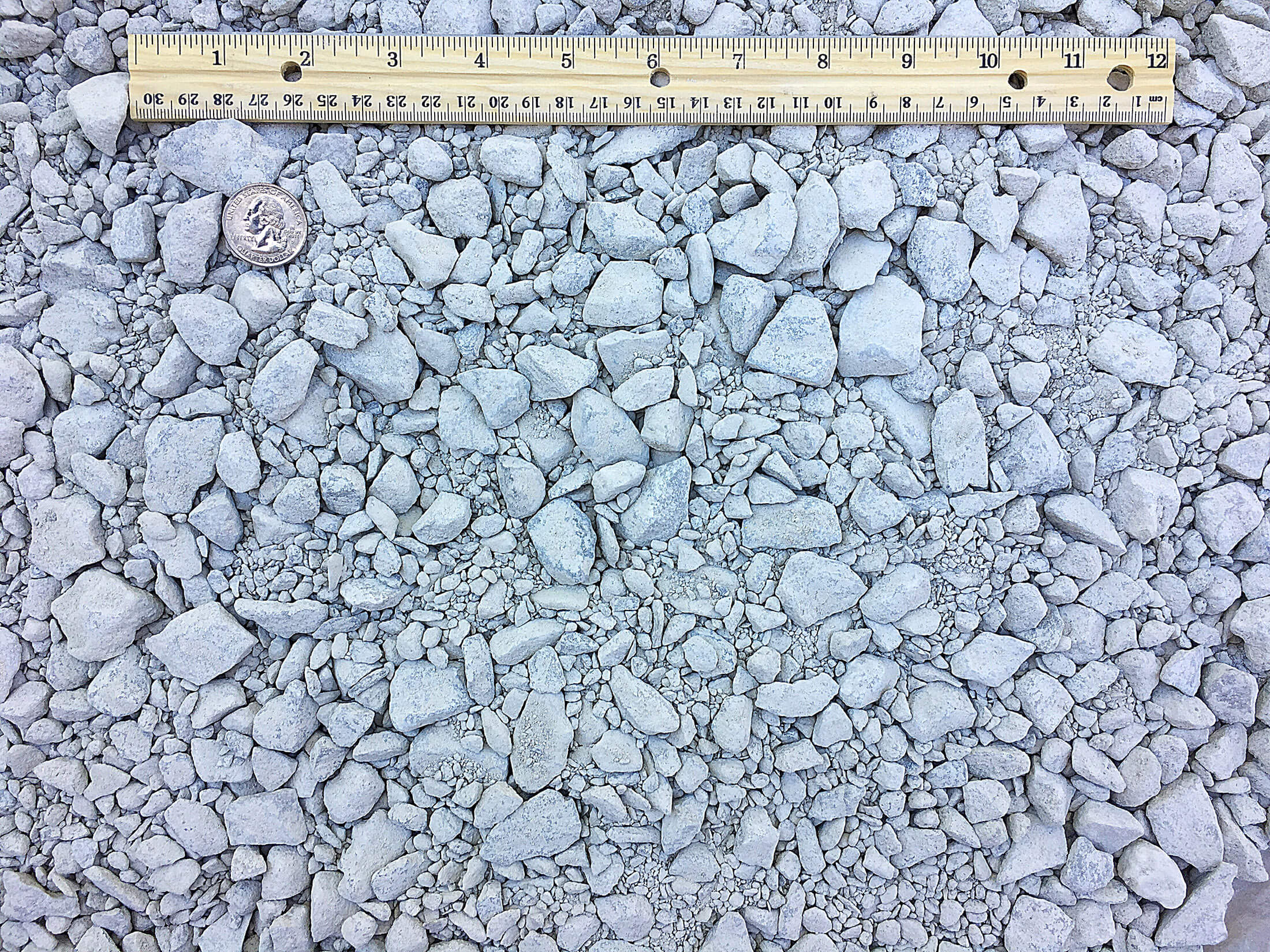
INDOT Limestone #53 is a well-graded crushed limestone base material. It contains a blend of larger aggregate pieces along with smaller particles and fines.
The fines are not an accident. They are what allow #53 stone to compact tightly and form a stable base. When moisture is added and the material is properly compacted, the fines fill the voids between the larger stones and lock everything together.
This is why #53 is considered a structural base material.
Typical size range
While exact gradation is defined by INDOT specs, #53 stone generally contains material ranging from larger crushed pieces down to stone dust. The mix is controlled, tested, and documented.
This controlled blend is what gives #53 its strength once compacted.
Common uses for INDOT #53
INDOT Limestone #53 is used anywhere a stable, load-bearing base is required. It is one of the most common materials used in Indiana transportation and site development projects.
Typical applications include:
- Road base under asphalt or concrete
- Parking lot base
- Commercial and industrial driveways
- Building pads and foundations
- Highway shoulders
- Access roads
- Utility trench backfill where structural support is required
If asphalt or concrete is going on top, there is a good chance #53 is underneath it.
Why #53 performs so well
The strength of #53 stone comes from compaction.
When installed correctly:
- The fines bind the material together
- Voids between stones are minimized
- Movement is reduced under traffic
- Load is distributed evenly
This creates a dense base that resists shifting and settling. That stability is critical for pavement longevity. Poor base material leads to cracking, rutting, and premature failure.
#53 is designed to prevent those problems.
Drainage characteristics
While #53 does allow some water movement, drainage is not its primary function. The fines that give #53 its strength also reduce its permeability compared to clean stone.
That’s why #53 is often paired with proper drainage systems, underdrains, or separation fabric when water management is a concern.
Installation considerations
To get the performance INDOT expects from #53 stone:
- Proper moisture content is critical
- Material must be placed in controlled lifts
- Each lift must be compacted correctly
- Proof rolling may be required
Skipping steps or rushing compaction are among the fastest ways to fail an inspection.
INDOT Limestone #8
What #8 stone is
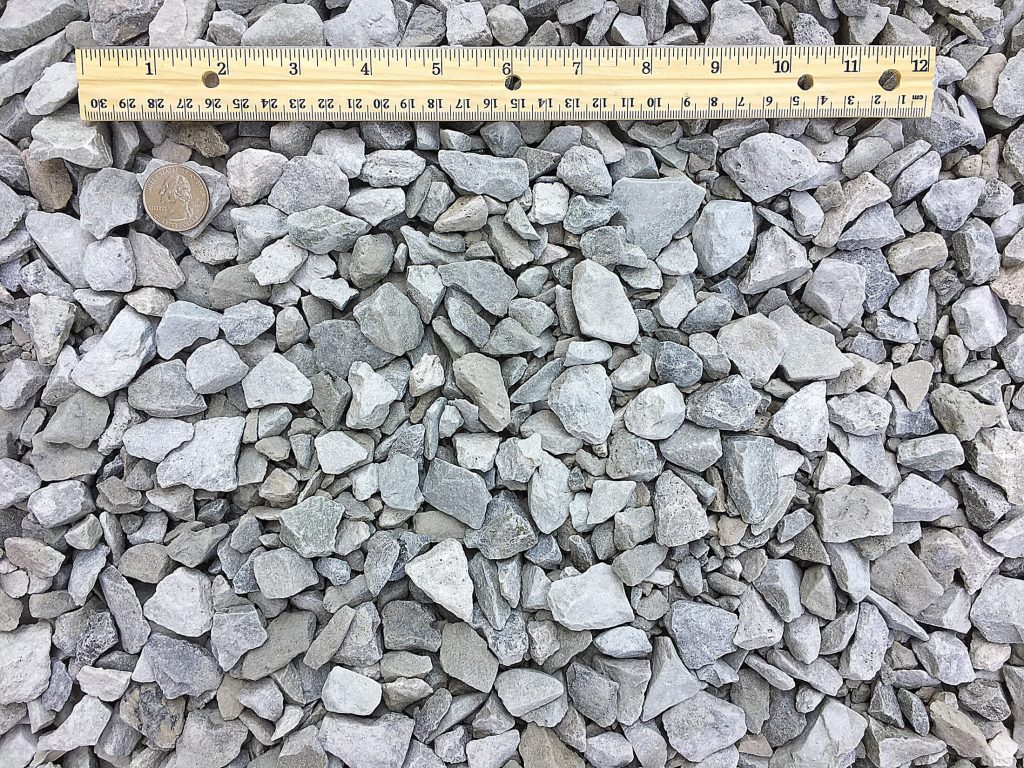
INDOT Limestone #8 is a small, clean crushed limestone with no fines.
Because it lacks fines, #8 does not compact the same way #53 does. Instead of locking together, the individual stones maintain void space between them. This allows water to move freely through the material.
That difference defines how #8 stone is used.
Typical size range
#8 stone is much smaller than #53. The pieces are uniform and consistently sized according to INDOT specifications.
The absence of fines is intentional and required.
Common uses for INDOT #8
INDOT Limestone #8 is primarily used for drainage and bedding, not structural support.
Common applications include:
- Drainage layers
- Pipe bedding
- Underdrains
- French drains
- Backfill behind retaining walls
- Concrete and asphalt production
- Utility installations where water movement is required
Anywhere water needs a path, #8 stone is usually the right choice.
Why #8 is not a base material
Because #8 stone does not compact into a dense mass, it is not suitable as a stand-alone base for pavement or heavy loads.
Under traffic, clean stone can shift if not confined. That movement leads to settlement and surface failure.
This is why INDOT does not allow #8 stone to replace #53 in base applications.
Drainage performance
Drainage is where #8 shines.
The void space between stones allows water to pass through quickly, reducing hydrostatic pressure and preventing water buildup around structures and utilities.
This is critical in Indiana, where freeze-thaw cycles can cause serious damage if water is trapped.
#53 vs #8: understanding the difference
Although both materials are INDOT limestone, they solve different problems.
- #53 provides strength and stability
- #8 provides drainage and protection
Using one where the other is required is a common and costly mistake.
Inspectors will catch it. And correcting it usually means removal and replacement.
Why INDOT Stone specifications matter
INDOT specifications are built around performance, not convenience.
These materials are tested for:
- Gradation
- Abrasion resistance
- Durability
- Soundness
- Consistency
The goal is long-term infrastructure that holds up under traffic, weather, and time.
Using uncertified stone risks:
- Failed inspections
- Project delays
- Costly rework
- Structural problems years later
This is why contractors request INDOT-approved stone by number, not by description.
Common mistakes contractors make with INDOT Stone
Some of the most common issues seen on INDOT-related projects include:
- Ordering “crushed limestone” without specifying the INDOT number
- Substituting non-INDOT stone to save money
- Using #8 where #53 is required
- Improper compaction of #53 stone
- Ignoring drainage requirements
Each of these can shut a job down.
How to order INDOT Limestone correctly
When ordering INDOT stone, clarity matters.
Be specific about:
- INDOT certification
- Stone number (#53 or #8)
- Quantity in tons
- Delivery location
- Jobsite access and unloading requirements
For larger projects, confirm availability ahead of time. INDOT-certified material can be in high demand during peak construction season.
Transportation and delivery considerations
Delivery logistics matter just as much as material quality.
Heavy trucks, tight access points, and jobsite staging all affect scheduling. Delays often come from delivery issues rather than material shortages.
Working with a supplier who understands INDOT projects reduces those risks.
Long-term performance and cost
Using the correct INDOT limestone upfront often costs less over the life of a project.
Stable bases reduce pavement failures. Proper drainage prevents frost heave. Inspections pass the first time.
Cutting corners on aggregate almost always shows up later, usually in expensive ways.
Final thoughts on INDOT Stone
Where to Buy INDOT #53 and #8 Limestone
INDOT Limestone #53 and INDOT Limestone #8 are both essential materials in Indiana construction. They are engineered for specific purposes and tested to meet strict standards.
Understanding how they differ, and where each belongs keeps projects compliant, durable, and on schedule.
When the plans call for INDOT stone, the safest move is simple: order the right number, from a supplier who knows the spec, and install it the way INDOT expects.
That approach avoids problems and keeps jobs moving forward.